Why Is My Furnace Blowing Cold Air?
Anderson Heating & Cooling •
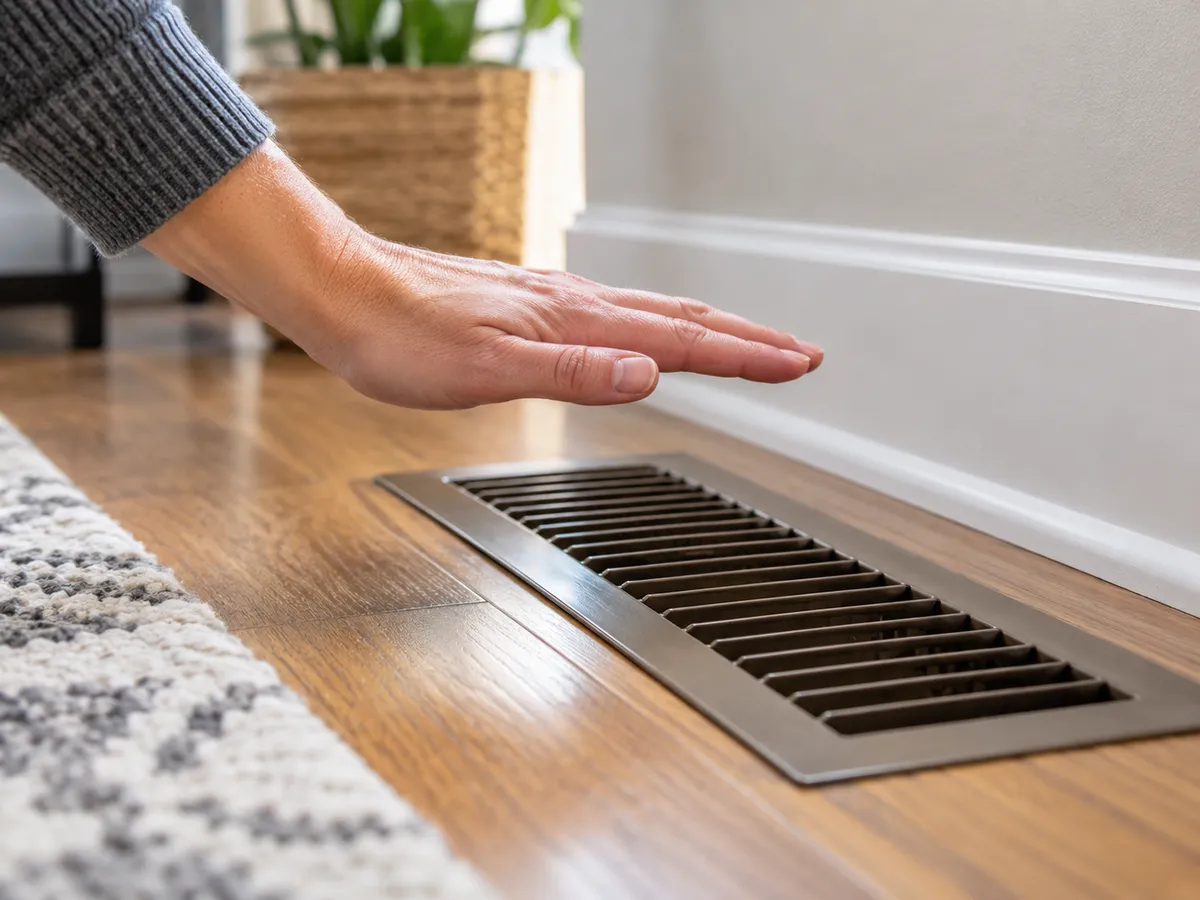
A furnace blowing cold air doesn't always mean something's broken. Every heating cycle starts and ends with a bit of cooler air, and if the thermostat's fan is set to On, the blower will keep pushing air through the vents even while the burners are off.
Air that stays cold is a different story. It means the blower is running with no heat behind it. Either the burners never lit, or they did, and a safety control shut them back off, usually because the furnace got too hot or couldn't confirm it had a flame.
The fastest way to sort out which one you're dealing with? Pay attention to when the cold air shows up. Below, we'll walk through what's normal, which checks you can safely handle yourself, and when it's time to call an HVAC contractor.
What the Timing of the Cold Air Tells You
Bump the thermostat a few degrees above room temperature, hold your hand near a supply register, and stay there for one full heating cycle. What you feel over those few minutes will narrow things down faster than anything else on this page.
| When the air is cold | What it usually points to | Where to start |
|---|---|---|
| For the first minute or two, then steadily warm | Normal startup | Nothing to fix |
| For a minute or two at the very end of a cycle | Normal blower run-on | Nothing to fix |
| Between cycles, with warm air while the furnace is heating | Thermostat fan set to On | The fan setting |
| After a few minutes of warm air, then warm again later | The furnace is overheating and shutting its burners off | The filter, registers, and return grilles |
| The whole time, with no warm air at any point | The burners are not lighting or not staying lit | Thermostat mode, the status light, vent pipes, and gas supply |
| Lukewarm, or cold only in certain rooms | Heat is being lost between the furnace and the register | Ductwork |
Cool Air That Is Normal
When the thermostat calls for heat, the burners light first and warm up the heat exchanger. The blower kicks on after that. So the first air you feel at the vent is whatever was already sitting in the ducts, and in a lot of homes that's basement-temperature air. It usually clears out within a minute or two, though it can take a little longer in rooms at the end of a long duct run.
You'll notice something similar at the end of a cycle. The burners shut off, but the blower runs a little longer to pull the leftover heat out of the furnace, so the last bit of air is cooler. Our guide to a furnace's first run of fall goes over the other smells and sounds you can expect early in the season.
Keep in mind that moving air feels cooler than it really is. Even room-temperature air is well below skin temperature, so a draft from a register can feel cold on your hand when nothing's wrong at all. A better test is simple: does the house reach the temperature you set?
If you have a two-stage or variable-speed furnace, the air may feel even milder. These furnaces spend most of their time running at low output, so the cycles are longer and the air isn't as hot as what an older single-stage furnace puts out. As long as the house stays warm, that's how they're supposed to work.
Start at the Thermostat
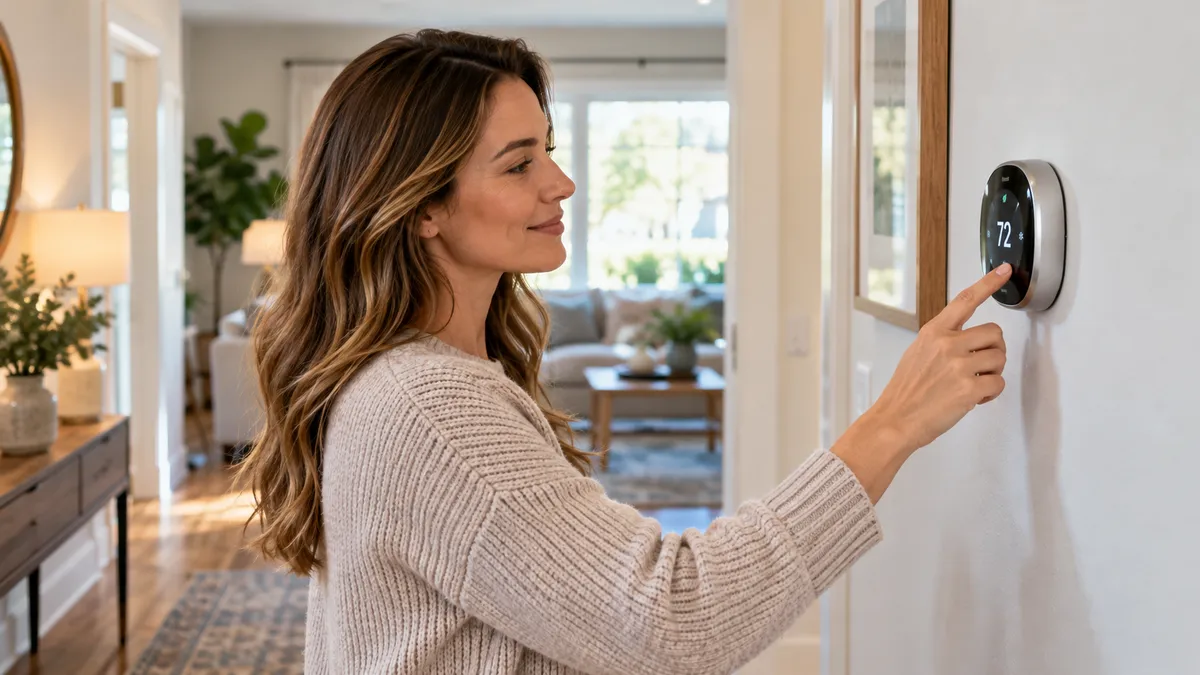
Plenty of cold-air complaints turn out to be a thermostat setting, with nothing wrong with the furnace at all. Check these before anything else.
- Fan. It should be on Auto. On the On setting, the blower runs nonstop, including the stretches between heating cycles when there's no heat to move. Some thermostats also have a Circulate option that runs the fan for part of every hour, which has the same effect.
- Mode. Make sure it says Heat. It's easy to leave it in Cool after a summer of running the AC.
- Temperature. Set it a few degrees above the current room temperature. If it's at or below what the room already is, the furnace has no reason to turn on.
- Schedule and batteries. Programmable and smart thermostats can hold the heat off during a setback schedule or away mode, so put yours on a manual hold while you test. And if the display looks dim or shows a low-battery icon, swap the batteries.
If the cool air only happened between cycles and switching the fan to Auto fixed it, you're done. That was the whole problem.
Warm Air That Turns Cold Points to Airflow
Your furnace depends on a steady flow of air across the heat exchanger to carry heat into the house. When not enough air gets through, heat builds up inside the furnace. Once it gets too hot, a safety control called the high limit switch shuts the burners off.
The blower keeps going to cool things down, and that's the cold air coming out of your vents. When the furnace has cooled off, the burners relight, and the whole thing starts over. Some furnaces will eventually lock themselves out after enough of these shutdowns and stop heating altogether.
The Filter
Most of the time, the culprit is a clogged filter, which is also the easiest thing to fix. Pull the filter out and hold it up to a light. Can't see light through it? Replace it with one of the same size, and make sure the arrow on the frame points toward the furnace.
Don't assume a filter you changed in spring is still fine. By October, it may have a whole summer of air conditioning behind it. Checking it once a month during heating season is a good habit, though how often you'll actually need to replace it depends on the filter and your household. One more thing: a filter that's much denser than what you normally use can restrict airflow too. If the problem started right after you switched filters, go back to the old type.
Registers and Return Grilles
Walk through the house and open any closed supply registers. While you're at it, check that furniture, rugs, or curtains aren't blocking them or the larger return grilles. Shutting the vents in rooms you don't use seems like it would save heat. Close too many, though, and you restrict airflow just like a dirty filter would.
Airflow Problems That Need a Technician
Clean filter, open registers, and still the same pattern? Then the restriction is somewhere inside the system. It could be a blower wheel caked with dust, a blower motor that's on its way out, or a dirty AC coil sitting above the furnace. Sometimes the limit switch itself has weakened with age and trips earlier than it should.
Don't let this one go. Overheating day after day puts a lot of stress on the heat exchanger, which is the part that keeps combustion gases out of the air you breathe.
Air That Never Gets Warm
If the air is cold from start to finish, the burners either aren't lighting or aren't staying lit. A gas furnace goes through the same startup sequence every time. First, a small exhaust fan, called the inducer, kicks on. A pressure switch checks that the vent is clear. Then the igniter heats up, the gas valve opens, and a sensor confirms there's a flame. If any one of those steps fails, you don't get heat.
Whether the blower runs anyway depends on your fan setting and how the control board handles the fault. Either way, the problem is in the furnace, not the ductwork.
Read the Status Light
Most newer furnaces have a small light on the control board that you can see through a little window in the lower door. If it's blinking in a repeating pattern, that's a fault code. Count the flashes and jot the pattern down before you turn anything off. On a lot of furnaces, cutting the power erases the code.
There's usually a chart explaining the codes on a label inside the door. They vary by brand and model, so don't go by a chart you found online for a different furnace. You don't have to figure it out yourself, either. Passing the pattern along to a technician saves time on the visit.
Burners That Light and Then Go Out
Hear the burners light and then shut off a few seconds later? The furnace isn't detecting its own flame. Usually that comes down to the flame sensor, a thin metal rod that sits in the flame and slowly builds up a coating. When the control board can't confirm a flame, it shuts the gas valve for safety. It'll retry a few times before locking out.
It's a common repair, and usually a quick one. But the sensor sits right next to the gas and ignition components, so we'd leave this one to a technician.
Blocked Vent Pipes and Drains
High-efficiency furnaces vent through plastic pipes that come out the side of the house, and they drain water through a small line near the base. A safety switch will keep the burners from lighting if one of those pipes gets blocked by snow, ice, leaves, or a nest, or if the drain backs up.
Around Lorain County and Cleveland's west side, this tends to happen after a heavy snow, when drifts bury pipes that sit low to the ground. Clear around the openings by hand, but don't push anything into the pipes. If you find water pooling at the base of the furnace, give us a call.
Gas Supply
See if another gas appliance works, like a burner on your stove. If nothing that runs on gas is working, the issue is with the supply coming into the house, and that's a call for your gas company.
If your other appliances are fine, find the shutoff valve on the gas line running to the furnace. When the handle lines up with the pipe, it's open. When it sits crosswise, it's closed. If it's closed and you don't know why, call before you open it.
Igniters, Pilots, and Controls
A cracked igniter, a bad gas valve, or a control board fault can also keep the burners from lighting. Those parts have to be tested with instruments, so they're a job for a technician.
Older furnaces with a standing pilot are a little different. If the pilot has gone out, you won't get any heat. You can relight it by following the instructions on the furnace label exactly, but if it won't stay lit, a part needs replacing. And if you smell gas, don't try to relight anything.
Lukewarm Air or Cold Rooms
Warm air near the furnace but weak, lukewarm air at the far end of the house usually means the furnace is fine and the heat is getting lost along the way. Ducts that run through a garage, crawlspace, attic, or unfinished addition lose heat through their walls. Loose joints let heated air escape before it ever reaches the room.
A leaky return duct can work in reverse, pulling cold air from those spaces into the system. Still, duct problems tend to make some rooms cooler than others. If every register in the house is blowing cold, look at the furnace instead.
If Your System Is a Heat Pump
Not every home in the area heats with a furnace alone. Some use a heat pump, often with a gas furnace as backup for the coldest days. Heat pump air isn't as hot as furnace air, so it can feel cool on your hand while it's still warming the house. You may also notice cooler air for a few minutes while the outdoor unit runs through a defrost cycle.
If the house keeps up with the thermostat, that's normal. If it doesn't, the causes are different from the ones above, and our team handles heat pump repair as well.
Should You Turn the Furnace Off?
If the burners keep shutting off, or the blower runs nonstop without any heat, switch the thermostat to Off until you've found the cause. Letting it keep cycling won't fix anything. It just puts more wear on the safety controls.
After you've changed the filter or cleared a vent pipe, it's fine to try one reset. Most gas furnaces don't have a single reset button. You reset one by turning it off at its power switch, waiting about a minute, then turning it back on.
If it shuts down again, stop there. A safety control shut it off for a reason, and resetting it over and over just fights that control without fixing anything. The same goes for any small reset buttons inside the cabinet. Leave those alone.
If you're going to be without heat for a while in freezing weather, electric space heaters are the safer option. Never use a gas oven, grill, or camp stove to heat the house. It also helps to let faucets on outside walls drip so the pipes don't freeze.
When to Stop and Get Help Right Away
Some situations shouldn't wait for troubleshooting.
- You smell gas. Get out of the house first, and don't touch the light switches. Once you're outside, call your gas company and 911. Then call us at (440) 221-7978.
- Your carbon monoxide alarm sounds. Get everyone outside and call 911. Our carbon monoxide guide covers where it comes from and what detectors can and can't do.
- The burner flames are yellow or flickering. Healthy burner flames are steady and blue. Shut the furnace off and call.
- You smell burning plastic, or see soot or scorch marks on or near the furnace.
- The furnace breaker trips again after one reset.
When to Call for Furnace Repair
It's time to call a technician if the air is still cold after you've checked the thermostat, filter, and registers, if the burners keep shutting off, or if the status light is flashing a fault code. Having a few details handy when you call will help:
- When the cold air shows up (at the start, partway through a cycle, or the whole time).
- The status light pattern you wrote down.
- The furnace brand and roughly how old it is.
- What you've already checked or changed.
If none of this brought the heat back, we can take it from here. Anderson Heating & Cooling handles furnace repair for homeowners in Elyria, Lorain County, and Cleveland's west side. We're available 7 days a week, with same-day repairs and 24/7 emergency service, and we work on all major furnace brands. You'll get an itemized quote before we start any work. Give us a call at (440) 221-7978.
Most of these problems build up slowly, whether it's a filter filling with dust or a flame sensor collecting grime. A fall furnace tune-up is the best time to catch them, and every visit includes a heat exchanger and carbon monoxide check. If you'd rather not keep track of it yourself, a yearly furnace tune-up comes with our maintenance plan.