The First Time Your Furnace Runs This Fall: What’s Normal and What Isn’t
Anderson Heating & Cooling •
There’s a night every October on Cleveland’s west side when the temperature finally drops enough that you give in and turn the heat on. What happens over the next hour tells you a lot about the winter ahead, if you know how to interpret it.
Some of what you’ll notice is completely expected. A furnace that’s been sitting idle since March is going to do a few things the first time it fires that it won’t do again until next fall. Other signs point to problems worth addressing before the weather gets serious. The trouble is that homeowners often can’t tell which is which, so they either panic over something harmless or ignore something that matters.
Here’s how to read that first run.
The Burning Smell
This is the one that generates the most calls, and most of the time it’s nothing.
Over seven or eight months of sitting idle, dust settles on the heat exchanger, the burner assembly, and the interior surfaces of the furnace cabinet. When the system fires for the first time, that dust burns off. The result is a distinct hot, slightly acrid smell that circulates through the house for anywhere from a few minutes to about half an hour.
Normal: A dusty, hot-metal smell that appears within the first few minutes of operation and fades steadily. It should be noticeably weaker by the end of the first heating cycle and gone entirely by the second or third.
Not normal: A smell that persists across multiple heating cycles or into the next day. A chemical or plastic odor, which can indicate wiring insulation overheating. Anything with a burnt-electrical character. And most urgently, any smell resembling rotten eggs or sulfur, which is the odorant added to natural gas and means you should leave the house and call the gas company from outside before doing anything else.
If the dust smell is strong enough to be genuinely unpleasant, opening a few windows during that first cycle helps it clear faster.
Cold Air Before Warm Air
You turn the thermostat up, the system starts, and what comes out of the vents for the first minute or two is cool. This alarms people who assume the furnace isn’t heating.
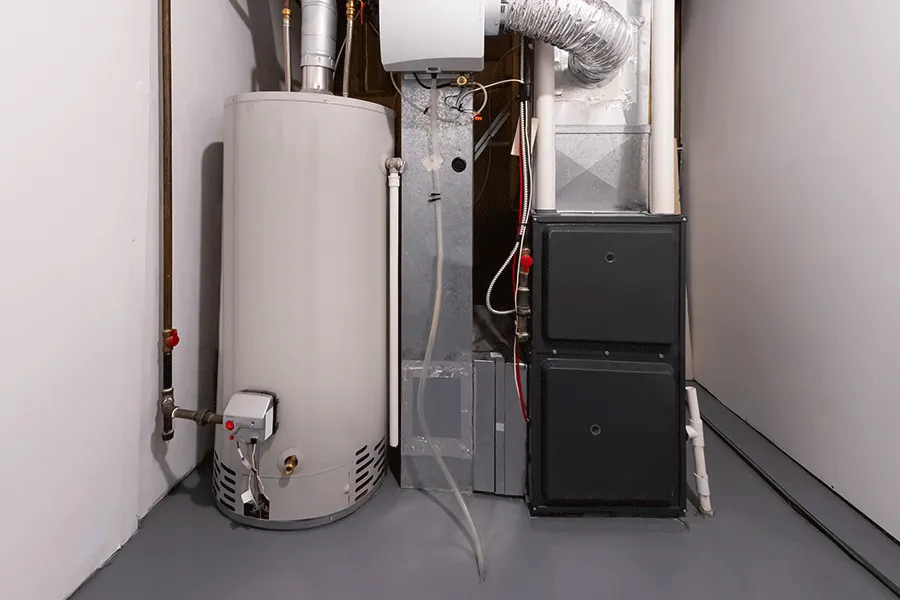
It is. Gas furnaces follow a startup sequence: the igniter heats, the burners light, the heat exchanger warms, and only then does the blower engage to move air across it. Some systems start the blower slightly early, which pushes the residual room-temperature air sitting in the ductwork out through the vents before heated air arrives behind it.
Normal: Cool air for thirty seconds to a couple of minutes at the start of a cycle, then a clear transition to warm.
Not normal: Air that never warms up across a full cycle. Air that starts warm and then goes cold mid-cycle, which often means the system is overheating and shutting the burners down on a safety limit while the blower keeps running. Both of these are worth a service call.
The Sounds
A furnace makes more noise than an air conditioner and a wider variety of it, which makes fall startup sounds harder to evaluate.
Normal startup sequence: A click as the thermostat calls for heat. A soft whooshing as the inducer motor starts and establishes draft. A brief pause. A quiet whoomph as the burners ignite. Then the blower engages, which produces steady air movement noise that continues through the cycle.
Popping or ticking in the ductwork is usually normal. Sheet metal ducts expand as heated air moves through them and contract as they cool, and that thermal movement produces popping sounds. It’s more noticeable in the first few cycles of the season and in homes with older ductwork. Annoying, generally harmless.
Not normal, and worth attention:
A rumbling or booming at ignition, sometimes called delayed ignition. This happens when gas accumulates briefly before igniting, producing a small explosion rather than a smooth light. It stresses the heat exchanger and points to dirty burners or a gas pressure issue.
Repeated clicking without the system starting. The igniter is attempting and failing to light the burners, or the flame sensor isn’t confirming the flame after ignition. Furnaces typically try three times before locking out. This is one of the most common first-run failures and often traces back to a flame sensor that oxidized over the humid summer months.
Squealing or screeching, which usually means blower motor bearings or, on older belt-driven systems, a worn belt.
Grinding or metal-on-metal contact. Shut the system down and call. Something has come loose, or a bearing has failed.
If your system is making a sound you can’t place, Anderson’s repair and servicing team can diagnose it before it turns into a January problem.
Short Cycling on the First Run
The furnace fires, runs a few minutes, shuts off, then fires again shortly after. Repeat.
Sometimes normal: On a mild fall day when the house only needs a small amount of heat, shorter cycles are expected. The thermostat is satisfied quickly because the temperature gap was small to begin with.
Not normal: Cycles that last only two or three minutes and repeat continuously, especially when the house isn’t reaching the set temperature. This usually means the furnace is overheating and shutting down on its high-limit switch. The most common cause is restricted airflow, which after a summer of the AC running often comes down to a filter that never got changed. Closed or blocked vents throughout the house produce the same effect.
Short cycling isn’t just inefficient. Each ignition cycle puts thermal stress on the heat exchanger, and a system that short cycles all winter ages considerably faster than one running normal cycles.
The first thing to check is the filter. If it’s gray and loaded, replace it, then watch whether the cycling pattern normalizes over the next day.
Uneven Heat Between Rooms
The first cold night is when homeowners rediscover that the back bedroom never gets warm.
Somewhat normal: Rooms furthest from the furnace, above garages, or with more exterior wall and window area will run a few degrees cooler. That’s a distribution characteristic of the house, not necessarily a failure.
Worth investigating: A gap of more than five to eight degrees between rooms. A room that was fine last winter and isn’t this year. Rooms where you can feel little or no air coming from the supply vent.
Start with the obvious: confirm supply vents are open and nothing has been moved in front of them or in front of return grilles over the summer. Beyond that, the cause is usually duct-related, whether leakage in runs through unconditioned space, a disconnected section, or a system that was never balanced properly. Cleveland’s older west side housing stock often has ductwork that was designed for a different configuration than the house has today, especially where additions or finished basements were added later.
What Should Never Be Treated as Normal
A few things warrant immediate action regardless of context.
A carbon monoxide detector alarm. Get everyone out, call 911 from outside, and don’t go back in until responders clear it.
Any gas smell. Leave without operating light switches or appliances, and call the gas company from outside.
Visible flame outside the burner compartment, or flames that are yellow and lazy rather than steady blue. Both indicate combustion problems that can produce carbon monoxide.
Soot accumulation around the furnace or on nearby surfaces, which points to incomplete combustion.
If you have a combustion heating system and your CO detectors are more than seven years old, replace them. The sensors degrade whether or not the unit still powers on and passes a self-test.
The Case for Testing It Early
The most useful thing about all of this is that you can run the test whenever you want. You don’t have to wait for the first genuinely cold night to find out whether your furnace works.
Pick a mild day, set the thermostat to heat, and raise the setpoint above the current room temperature. Let it run a full cycle or two. Note what you smell, what you hear, and whether the air actually gets warm and stays warm.
Doing this in September or early October means that if something is wrong, you find out with time to schedule a normal service call. Waiting until the first hard freeze means discovering the problem alongside everyone else in Elyria and Lorain County who also just turned their heat on, when schedules are tightest.
For homeowners who’d rather have a technician confirm the system is ready rather than interpreting it themselves, Anderson’s maintenance plans include seasonal tune-ups that catch the common first-run issues before they surface. And if the assessment points toward a system nearing the end of its useful life, financing options are available so the timing of a replacement isn’t dictated entirely by the budget.
Schedule a visit with Anderson Heating & Cooling today if that first run gave you anything to think about.