Why Is My Furnace Short Cycling?
Anderson Heating & Cooling •
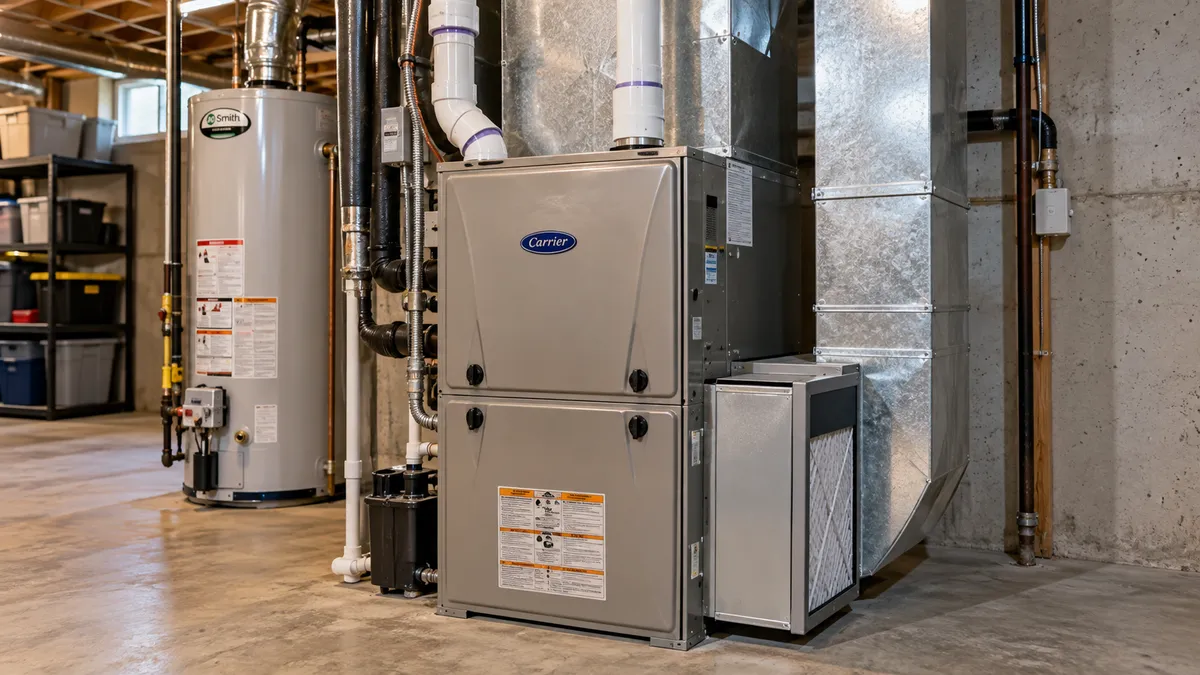
Furnace short cycling is when your furnace kicks on, runs for a few minutes, shuts off, and then starts right back up again, often before the house ever reaches the temperature you set. Besides being annoying, it burns extra gas, wears out parts sooner, and leaves some rooms colder than others.
Most cases come down to one of three things. Either the furnace can't confirm its own flame, it's overheating and shutting itself down, or the thermostat thinks the house is warm before it really is. That last one usually happens because of where the thermostat is mounted or because the furnace is bigger than the house needs.
Your best clue is how long the burners stay lit before they shut off. Below, we'll show you how to time a cycle, what each pattern tends to mean, and which checks you can safely do before calling a technician.
What Counts as Short Cycling
There isn't a set number of minutes that makes a cycle too short. How long a furnace runs depends on how cold it is outside, how well your house holds heat, how the thermostat is set, and what kind of furnace you have.
The weather makes the biggest difference. On a mild October afternoon, your house barely needs any heat, so the furnace hits the set temperature fast and shuts off. That's normal. You'll see the cycles get longer as the nights get colder.
Real short cycling shows up as a pattern, and you'll usually notice more than one of these signs:
- The furnace runs a few minutes or less, again and again.
- The house never quite gets to the set temperature, or it does at the thermostat while other rooms stay chilly.
- Cycles are still short on a cold day, when the furnace ought to be running longer.
- The burners shut off while the thermostat is still calling for heat.
- It's acting differently than it did last winter.
Pay the most attention to the fourth one. If the furnace stops because the thermostat is satisfied, it's just doing what it was told. If it stops on its own while the house is still below the set temperature, one of its safety controls shut it down.
Time One Cycle Before Anything Else
Turn the thermostat up a few degrees above room temperature and stand near the furnace. Watch for when the burners light and when they go out. Does the blower keep running afterward? Has the thermostat reached its setting? Try to catch two or three cycles, so you're looking at a pattern, not a one-off.
| What you notice | What it usually points to | Where to start |
|---|---|---|
| Burners light and go out within a few seconds, several times in a row | The furnace is not detecting its flame | A service call; this is usually the flame sensor |
| Burners run for a few minutes, then go out while the blower keeps running | The furnace is overheating | The filter, registers, and return grilles |
| The exhaust fan starts and stops, or the burners cut out partway, on a high-efficiency furnace | A venting or drainage problem | The outdoor vent pipes and the drain |
| The thermostat reaches its setting quickly, then calls again soon after | The thermostat's location or settings | What is near the thermostat |
| Short cycles and uneven rooms ever since the furnace was installed | A furnace that is too large for the house | A professional evaluation |
Burners That Go Out Within Seconds
If the burners light and then shut off almost right away, the furnace has lost track of its own flame. There's a thin metal rod called a flame sensor sitting in the burner flame, and its job is to tell the control board the gas is actually burning. Without that signal, the board shuts the gas valve to be safe.
Over time, the sensor builds up a coating that weakens that signal. The furnace will usually try a few more times, then lock itself out for a while before it tries again. From your living room, it just sounds like the furnace keeps starting and stopping without much heat coming out.
It's one of the more common heating repairs, and it's usually quick. Since the sensor sits in the burner compartment right next to the gas and ignition parts, we'd leave it to a technician. A weak or uneven flame can cause the same thing. That usually means dirty burners or a gas pressure issue, which has to be checked with a gauge.
Burners That Run a Few Minutes, Then Shut Off
This is the most common pattern, and it almost always traces back to airflow. Your furnace needs air moving across the heat exchanger to carry heat away. If too little air gets through, things heat up inside the cabinet until a safety control called the high limit switch turns the burners off.
The blower stays on to cool the furnace down. Once it's cooled off, the burners relight, it overheats again, and the whole thing repeats. Here's the giveaway: the fan never stops, but the burners keep coming and going.
Check the Filter
Start with the filter, since a clogged one is the usual cause. Hold it up to a bright light or a window. If the light barely comes through, put in a new one of the same size. The arrow printed on the frame should point toward the furnace.
Keep in mind that by October, your filter has probably been working all summer with the AC. Also, if you recently switched to a much more restrictive filter and the short cycling started around the same time, that could be why. Go back to the type you were using before.
Open the Registers and Clear the Returns
Next, make a quick lap around the house. Open any supply registers that are closed, and move anything sitting on or in front of the vents and the bigger return grilles. A lot of people close the vents in spare rooms to save on heat. Close enough of them, though, and the furnace can't get enough air, the same as with a dirty filter.
When the Filter Is Not the Problem
If the filter's clean and the vents are open, the restriction is probably somewhere you can't see. Dust buildup on the blower wheel, a weak blower motor, or a dirty AC coil above the furnace can all cut down on airflow. An aging limit switch can also trip sooner than it's supposed to.
After a filter change, give it a day and see if the cycles go back to normal. If they don't, it's time to have someone take a look.
Venting and Drain Problems on High-Efficiency Furnaces
High-efficiency furnaces vent through plastic pipes on the side of the house, and they have a small drain line near the base for the water they produce. A pressure switch keeps an eye on airflow through those pipes. If one gets partly blocked or the drain backs up, the switch shuts the burners off, sometimes in the middle of a cycle.
Head outside and take a look at the openings. Leaves, nests, ice, and drifting snow are the usual suspects, and low pipes are the first to get buried after a big snowfall. Clear things away by hand, but don't poke anything into the pipes themselves.
Back inside, check for water around the base of the furnace. Some furnaces have a small condensate pump next to them, so make sure yours is plugged in. If you see standing water or the pump's tank is full, give us a call.
When the Thermostat Is Ending Cycles Early
Sometimes there's nothing wrong with the furnace at all. The thermostat is just shutting it off too early. It only knows the temperature right where it's mounted, so if that spot warms up faster than the rest of the house, the cycle ends before the other rooms catch up.
- Location. If it's near a supply register, gets direct sun, sits by a lamp or TV, or shares a wall with the kitchen, it'll read warmer than the rest of the house.
- Drafts. The opposite can happen too. A thermostat near an outside door or in a drafty hallway may call for heat again just minutes after the furnace shuts off.
- Batteries. Low batteries can make a thermostat act strangely. If the screen looks dim or you see a low-battery icon, swap them out.
- Cycle settings. Many thermostats have an installer setting that limits how often the furnace can cycle. Did the problem start after you got a new thermostat? Check the manual, or have a technician make sure that setting matches your furnace.
Here's an easy test. Put a separate thermometer in the middle of the room and compare it with the thermostat. If the thermostat keeps reading several degrees off, its location is likely the problem. Moving a thermostat means rerouting the wiring, so that part's best left to a technician.
A Furnace That Is Too Large for the House
When a furnace puts out more heat than the house needs, it warms the air around the thermostat quickly and shuts off before that heat has a chance to spread. Rooms close to the furnace end up hot, rooms farther away stay cool, and a few minutes later it starts all over.
How can you tell this apart from a repair problem? It's usually been happening since the furnace went in, it's worse in mild weather, and the furnace isn't tripping any safety controls. It can also show up later. New windows, extra insulation, and air sealing all cut how much heat a house needs, and that can leave a furnace that used to be the right size a bit too big.
An oversized furnace doesn't automatically mean you need a new one. A technician can check that the blower speed, gas input, and thermostat settings are right for your equipment. Adjusting them within the manufacturer's limits can often lengthen the cycles.
The permanent fix comes when it's time to replace the furnace, because the new one can be sized for your house as it is now. Sizing is part of every furnace installation we do. It's also worth asking about two-stage and variable-speed models. They run at lower output most of the time, so they cycle less.
Is It Safe to Keep Running a Short Cycling Furnace?
That depends on what's causing it. If it's the thermostat's location or the size of the furnace, you're dealing with wasted energy and uneven heat, but nothing is shutting the furnace down for safety reasons.
It's a different story if the furnace keeps going out on its limit switch or pressure switch. Those shutdowns are the furnace protecting itself. Letting that go on for days is hard on the safety controls and puts a lot of heat stress on the heat exchanger. If a new filter and open vents don't stop it, turn the thermostat to Off and call for service.
Short cycling costs you money over time, too. Starting up is the hardest part of each cycle on the igniter and motors, so a furnace that starts far more often than it should will wear those parts out faster.
Some signs mean you should act right away instead of troubleshooting:
- You smell gas. Get out of the house first, and don't flip any light switches. Once you're outside, call your gas company and 911. Then call us.
- Your carbon monoxide alarm sounds. Get everyone outside and call 911. Our carbon monoxide guide explains how a furnace can produce it.
- The burner flames are yellow or flickering. Normal flames are steady and blue. Turn the furnace off and call.
- You hear a boom or loud rumble when the burners light.
- You see soot or scorch marks on or near the furnace.
When to Call for Furnace Repair
Go ahead and call a technician if the cycles are still short a day after you change the filter, if the burners go out within seconds, or if the furnace locks out and quits trying. You may also see a status light flashing a fault code through the little window in the furnace door. Write down the pattern before you shut the power off, since that clears the code on a lot of furnaces.
When you call, it helps to have a few details ready:
- About how long the burners stay lit, and how long the furnace sits idle between cycles.
- Whether the blower keeps running after the burners go out.
- Whether the thermostat reaches its setting.
- The status light pattern, the furnace brand, and its approximate age.
- Anything that changed recently, such as a new filter type, a new thermostat, or new windows.
Anderson Heating & Cooling handles furnace repair throughout Elyria, Lorain County, and Cleveland's west side. We're available 7 days a week and offer same-day repairs and 24/7 emergency service. We'll find the cause first and give you an itemized quote before we start any work. Call us at (440) 221-7978.
A lot of these problems build up quietly over the summer, which is why short cycling often shows up in the first few weeks of heating season. A fall furnace tune-up is a good time to catch a dirty flame sensor or blower before it causes trouble, and every visit includes a heat exchanger and carbon monoxide check.